The Lewis & Clark Trail: American Exploration and Discovery
May 2, 2026 9:23am
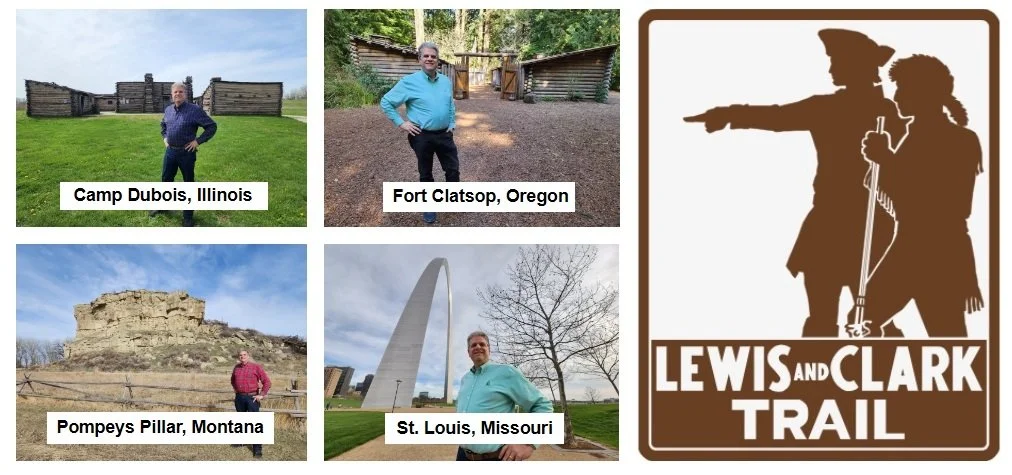
The Lewis & Clark Expedition lasted from May 14, 1804 - September 23, 1806. Meriwether Lewis, William Clark, and the rest of the "Corps of Discovery" traveled 8000 miles from the banks of the Mississippi River to the Pacific Ocean and back. The expedition was planned before the Louisiana Purchase happened. President Jefferson wanted to know what was west of the Mississippi River and whether or not there was a Northwest Passage to the Pacific Ocean.
Along the westward journey, the Corps of Discovery met with indigenous tribes and extended to them friendship, gifts, and a notification that their land was now part of the United States. Traveling with the Corps was a 16 year-old woman, Sacagawea, and her infant son.
Shortly after reaching the Pacific Ocean in mid-November 1805, the Corps built Fort Clatsop where they wintered in the northwest corner of Oregon near the mouth of the Columbia River. Then on March 23, 1806, they began their eastward journey home.
During the 2 years, 4 months, and 10 days of the Lewis and Clark Expedition, the Corps of Discovery traveled across water and land that is now part of eleven states: Illinois, Missouri, Kansas, Nebraska, Iowa, South Dakota, North Dakota, Montana, Idaho, Washington and Oregon. It would be 16 states if we include Pennsylvania, West Virginia, Ohio, Kentucky, and Indiana that Lewis went through on his way to the official starting point at Camp Dubois, Illinois.
Their expedition remains one of the most significant exploratory journeys in the history of the United States. It was both a scientific mission and a bold geopolitical venture. The journey reshaped America's understanding of our continent and laid the groundwork for the westward expansion that would define our nation’s future. It is one of the most amazing stories in American history.
I traveled the Lewis & Clark Trail where I stopped to interview park rangers about the expedition at Camp Dubois, Fort Clatsop, Pompeys Pillar, and Gateway Arch National Park. Those interviews were compiled into a two-part radio documentary. Part 1 of that documentary aired on the radio last week. Part 2 aired today. If you missed the broadcasts, both episodes are archived online as podcasts. Part 1 is at www.TheMikeBatesShow.com/podcasts/260425. Part 2 is at www.TheMikeBatesShow.com/podcasts/260502.